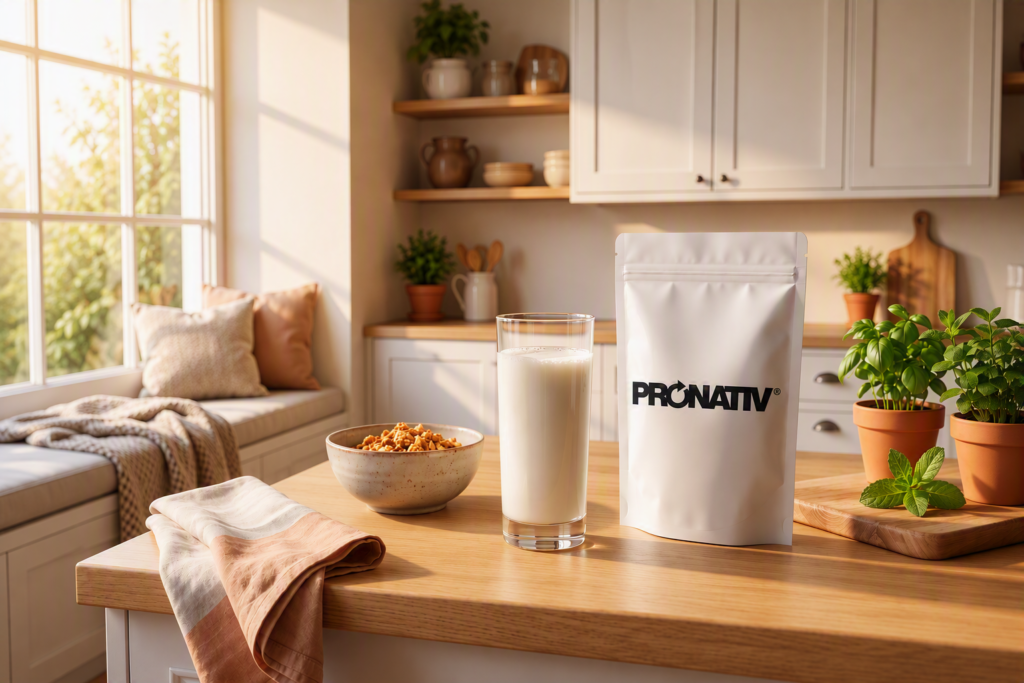
After 40, adults can lose roughly 1–2% of muscle mass per year [1]. Most of them don’t notice until a suitcase feels heavier or stairs get harder. Pre-sleep protein — specifically native micellar casein — is emerging as a practical way to keep the overnight amino acid supply running. For brands targeting active ageing, it’s a formulation lever that’s still largely untapped.
The 40+ muscle problem nobody talks about
Muscle mass decline can start around age 40. That’s not news for geriatricians — but it’s invisible to most consumers. A 2025 meta-analysis in Frontiers in Nutrition confirms the trajectory: sarcopenia affects 5.7% to 33% of adults aged 65+, and the process can begin two decades earlier [2]. The European Working Group on Sarcopenia (EWGSOP2) has documented a loss of both mass and strength that accelerates with inactivity and poor nutrition [3].
The problem? Active adults in their 40s and 50s don’t identify with clinical sarcopenia. They run, cycle, do yoga, lift weights. They eat reasonably well. But the anabolic response to protein blunts with age — the same 20 g serving that built muscle at 25 may be less effective at 45. This is known as anabolic resistance: the body’s reduced ability to convert dietary protein into muscle protein synthesis (MPS), especially without optimised timing and dosing [4].
Petermann-Rocha et al. (2022) in the Journal of Cachexia, Sarcopenia and Muscle put it clearly: muscle decline can start from approximately 40 years onwards, and the adverse effects on quality of life, morbidity, and mortality could affect both middle-aged and older-aged adults — though the extent depends on nutrition, physical activity, and genetic factors [1].
What happens to your muscles while you sleep
Sleep is the longest period without protein intake in any 24-hour cycle. For most people, that’s 7–9 hours with zero amino acid supply. During this window, muscle protein breakdown naturally exceeds synthesis — this is a normal part of protein turnover that helps maintain metabolic homeostasis, including blood glucose regulation. However, over time, repeated negative overnight protein balance can contribute to gradual muscle loss, especially in older adults with blunted anabolic responses [4].
Research from Maastricht University has demonstrated this repeatedly. In a randomised controlled trial published in Sports Medicine (Trommelen et al., 2023), pre-sleep protein ingestion — casein or whey, 45 g — increased both myofibrillar and mitochondrial protein synthesis rates during overnight recovery from endurance exercise compared to placebo. The effect was consistent and significant (p = 0.012 for myofibrillar, p = 0.005 for mitochondrial) [5].
A systematic review by Reis et al. (2021) confirmed: ingesting 20–40 g of casein approximately 30 minutes before sleep stimulates whole-body protein synthesis during overnight recovery from exercise [6]. In older men specifically, a study by Kouw et al. (2017) in the Journal of Nutrition showed that 40 g of casein before sleep was effectively digested and absorbed overnight, with resulting amino acid availability directly fuelling muscle protein synthesis [7].
So what does this mean in practice? The overnight window is recoverable — and casein’s slow digestion profile makes it particularly suited to that role.
Fast protein, slow protein: where native micellar casein fits
Not all proteins behave the same way after ingestion. Whey protein delivers a rapid aminoacidaemia — a sharp, fast peak of circulating amino acids that can enhance myofibrillar protein synthesis and anabolic intramuscular signalling, particularly after resistance exercise [8]. It’s ideal post-workout.
Micellar casein works differently. Its native micellar structure forms a gel-like matrix in the stomach, slowing gastric emptying and releasing amino acids progressively over several hours. Shibata et al. (2022) showed that micellar casein ingestion resulted in 1.3- to 1.5-fold higher gastric antrum area under the curve compared to sodium caseinate and whey protein concentrate, confirming slower gastric emptying kinetics in humans [9].
Native micellar casein — extracted directly from fresh milk via membrane filtration, without the acid precipitation used for acid casein (or the subsequent neutralisation step used for caseinates) — preserves the micellar structure more effectively. The casein micelles stay intact, which is precisely what gives native micellar casein its slow-release profile. For formulators, that means predictable, prolonged amino acid delivery in a clean-label ingredient.
Product formats for an audience that doesn’t want a gym shake
Active adults over 40 are not looking for the same product as a 25-year-old bodybuilder. They want something that fits into an evening routine, not a supplement regimen. That opens the door to formats the sports nutrition industry has barely touched:
Evening RTDs. A 200–250 mL ready-to-drink with 30–40 g of native micellar casein, designed for the pre-bed moment. Mild flavours — vanilla, almond, warm honey — that signal “wind down”, not “pump up”.
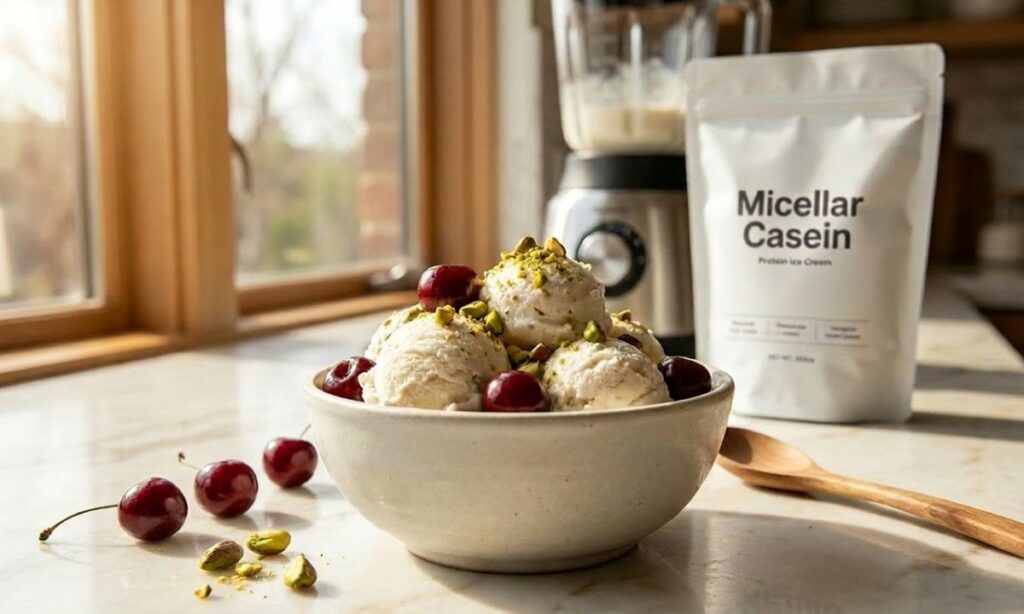
Dessert-style snacks. Protein puddings, mousse cups, or yoghurt-style products consumed after dinner. The micellar casein contributes to texture naturally: creamy, thick, satisfying — without excessive thickeners.
Pre-bed powders. A lighter format for the health-conscious consumer who already has a night-time ritual. Mix with warm milk, stir into a hot chocolate. The “slow protein” message lands naturally here. The communication angle matters as much as the format. “Protect what you’ve built all day”, “Support your active life at night” — this is language that resonates with a 45-year-old runner, not a clinical nutrition patient.
How Pronativ® Native Micellar Casein supports this strategy
Pronativ® Native Micellar Casein is produced directly from fresh milk through membrane filtration — a gentle process that preserves the native micellar structure. The result: intact casein micelles that deliver the slow, sustained amino acid release the science supports for overnight muscle maintenance.
Beyond the nutritional profile, native micellar casein contributes to smooth, drinkable textures in neutral-pH beverages — without the chalky or heavy mouthfeel that plagues many high-protein products. It’s compatible with UHT processing, stable over shelf life, and produces the creamy, white appearance consumers associate with dairy quality.
Active ageing is one of the fastest-growing segments in functional nutrition. Yet evening and night-time protein products remain scarce. Pronativ® gives brands the foundation to fill that gap with genuinely differentiated products.
FAQ
1.What is native micellar casein and how is it different from regular casein?
Native micellar casein is extracted from fresh milk by membrane filtration, preserving the natural micellar structure. Sodium caseinate is produced through acid precipitation followed by neutralisation with a base, which disrupts the original micelle structure. The key difference for formulators is that native micellar casein retains its slow-digesting, gel-forming properties and offers a cleaner label positioning.
2.Why is slow protein useful at night?
During sleep, no food is consumed for 7–9 hours. The natural process of protein turnover means that muscle protein breakdown exceeds synthesis during this period — a normal metabolic function. A slow-digesting protein like micellar casein maintains circulating amino acid levels through the night, supporting a more positive muscle protein balance [5][6].
3.Is native micellar casein appropriate for non-athletes over 40?
Yes. The research supporting pre-sleep casein applies to recreational exercisers and active older adults, not exclusively elite athletes. The anabolic resistance that comes with ageing means these populations may actually benefit more from sustained amino acid delivery [4][7].
4.Can native micellar casein be used in dessert-style products?
Absolutely. Its gel-forming properties and creamy texture make it well suited for puddings, mousse, and yoghurt-style formats. It delivers a natural thickness without requiring excessive texturants.
Sources
[1] Petermann-Rocha F. et al. (2022). Global prevalence of sarcopenia and severe sarcopenia: a systematic review and meta-analysis. J Cachexia Sarcopenia Muscle, 13(1):86-99. DOI: 10.1002/jcsm.12783
[2] Frontiers in Nutrition (2025). Long-term impact of sarcopenia on functional decline and mortality in community-dwelling older adults: a systematic review and meta-analysis. DOI: 10.3389/fnut.2025.1652386
[3] Cruz-Jentoft AJ et al. (2019). Sarcopenia: revised European consensus on definition and diagnosis. Age Ageing, 48(4):601. DOI: 10.1093/ageing/afz046
[4] Burd NA et al. (2013). Anabolic Resistance of Muscle Protein Synthesis with Aging. Exerc Sport Sci Rev, 41(3):169-173. DOI: 10.1097/JES.0b013e318292f3d5
[5] Trommelen J et al. (2023). Pre-sleep Protein Ingestion Increases Mitochondrial Protein Synthesis Rates During Overnight Recovery from Endurance Exercise: A Randomized Controlled Trial. Sports Medicine. DOI: 10.1007/s40279-023-01822-3
[6] Reis CEG et al. (2021). Effects of pre-sleep protein consumption on muscle-related outcomes — A systematic review. J Sci Med Sport, 24(2):177-182. DOI: 10.1016/j.jsams.2020.07.016
[7] Kouw IWK et al. (2017). Protein Ingestion before Sleep Increases Overnight Muscle Protein Synthesis Rates in Healthy Older Men. J Nutr, 147(12):2252-2261. DOI: 10.3945/jn.117.254532
[8] West DWD et al. (2011). Rapid aminoacidemia enhances myofibrillar protein synthesis and anabolic intramuscular signaling responses after resistance exercise. Am J Clin Nutr, 94(3):795-803. DOI: 10.3945/ajcn.111.013722
[9] Shibata Y et al. (2022). Time Courses of Gastric Volume and Content after Different Types of Casein Ingestion in Healthy Men: A Randomized Crossover Study. J Nutr. DOI: 10.1016/j.tjnut.2022.07.016